
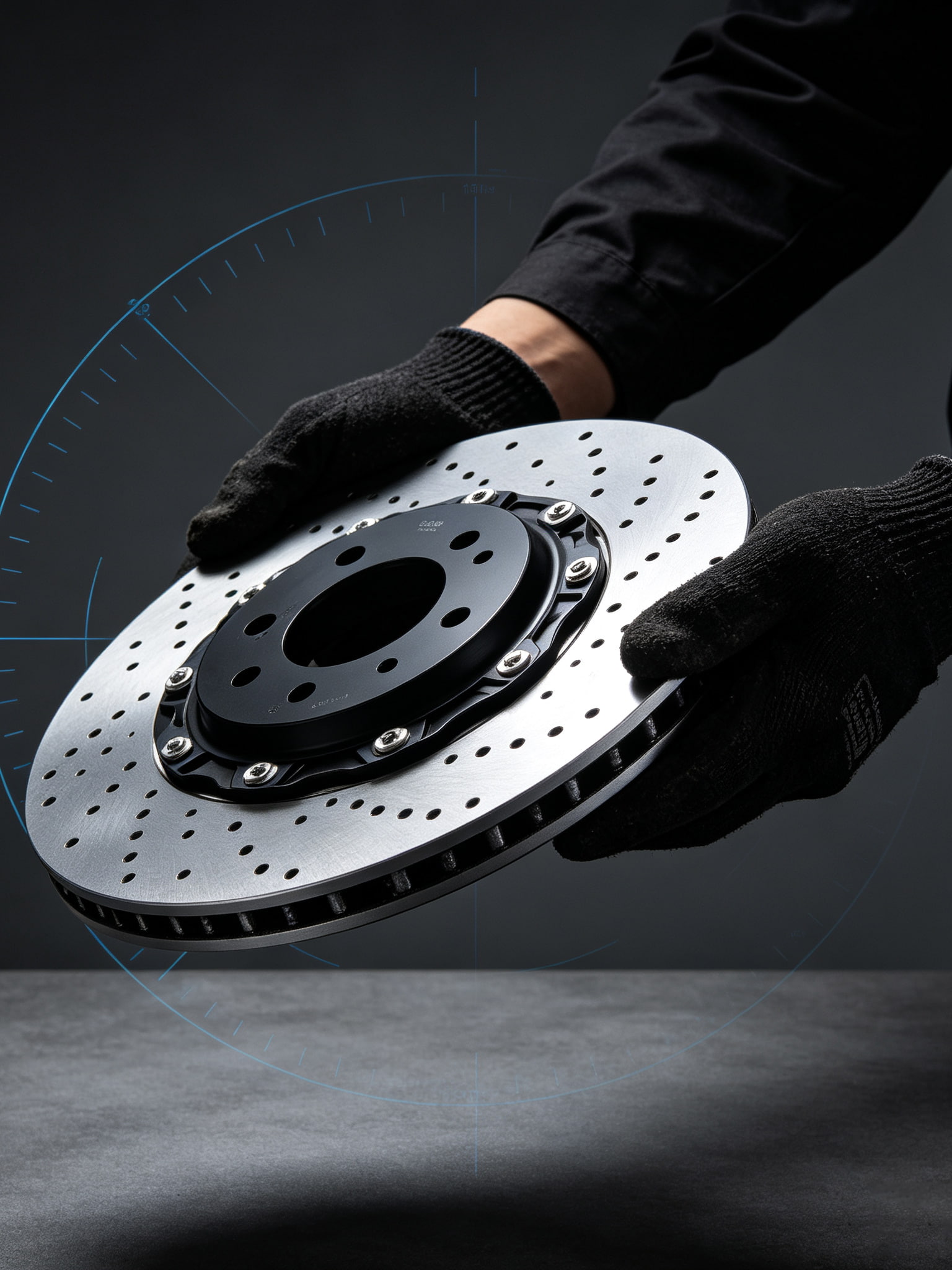
Carbon ceramic rotors deliver superior performance and longevity, yet they carry a steep price and real daily-driving trade-offs. Iron rotors stay cost-effective and practical for most daily drivers.
Your use case decides the answer. Track days and high-performance driving point to carbon ceramic brake discs. Commuting and budget-conscious ownership point to iron.
Hosenly Auto Parts supplies both rotor types. That makes this carbon ceramic vs cast iron comparison objective and driven by how you actually drive, not by what we stock. You get a straight read on where each option fits.
Key Takeaways
-
Carbon ceramic rotors resist brake fade better than iron rotors during hard, repeated braking.
-
Carbon ceramic rotors weigh about 50% less than iron rotors, improving handling and acceleration.
-
Carbon ceramic rotors last much longer than iron rotors, especially under heavy use.
-
Carbon ceramic rotors cost $8,000 to $15,000 for a full set, while iron rotors cost far less.
-
Choose carbon ceramic for track days and long-term performance; choose iron for daily commuting and budget.
Carbon Ceramic Brake Discs: Braking Power and Fade Resistance
Stopping Power and Bite
You might expect a carbon ceramic brake system to pull your car down from speed in a dramatically shorter distance. Real test data tells a more honest story. In a Car and Driver performance brake test, two identical Porsche 911s on identical tires ran one with carbon ceramic brakes and one with iron brakes. Their average stopping distances from 100 mph landed within a foot of each other, at 305 feet. The takeaway is simple: tires stop the car, and brakes stop the tires. A healthy carbon-ceramic rotor system is tire-limited in the same way an iron setup is.
Where carbon ceramic discs separate themselves is feel. They hold pedal consistency when hot, so your bite stays predictable lap after lap. That consistency matters more than a headline number. If you want a shorter stop, start with tires and a healthy brake system before you shop for rotors.
Heat Management and Fade Resistance
Fade deserves a plain definition. Brake fade is the temporary loss of braking efficiency caused by excessive heat buildup, particularly during prolonged braking on long grades, as TFLcar explains. The friction between pad and rotor drops, stopping power falls off, and the system recovers once it cools. Fade is temporary; brake failure is a mechanical fault that needs repair.
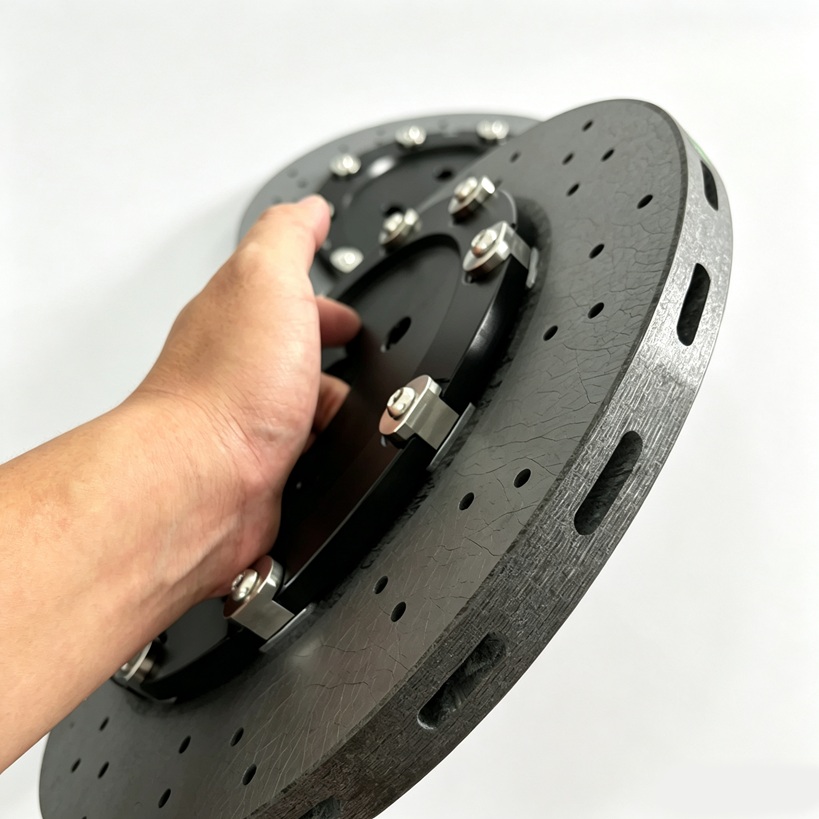
Carbon ceramic discs resist that heat-driven drop far better than iron. They provide consistent performance under extreme conditions, and they stand up to pad abrasion more effectively than iron rotors do. That abrasion resistance helps explain why carbon ceramic brake discs last so long in hard use.
Keep the comparison fair, though. Iron brake discs handle normal driving perfectly well, and most commuters never generate enough heat to notice fade. Carbon ceramic wins specifically under repeated high-heat use, such as track sessions or hard mountain descents. Under those conditions, the carbon ceramic brake disc keeps its friction level while iron begins to soften. That is the real dividing line for braking performance: not the first stop, but the twentieth hard stop in a row.
For everyday braking, both designs deliver safe, predictable results. For sustained abuse, the carbon ceramic hardware simply holds its composure longer. That difference defines the performance case for carbon ceramic discs, and it sets up the weight and durability questions that follow.
Weight and Durability of Carbon Ceramic Discs
Unsprung Weight and Rotational Mass
Unsprung mass is the mass of the suspension, wheels, and other components directly connected to them, as Wikipedia defines it. Rotational mass, or rotational inertia, matters because wheels both move and spin, and inertia rises with the square of the distance from the rotation axis, according to Osmond Forged.
Carbon ceramic discs cut both numbers at once. StopFlex reports that a carbon ceramic rotor weighs about 50 percent less than an equivalent cast iron rotor, depending on size and hat design. That saving sits exactly where it counts most.
|
Comparison |
Weight reduction vs. cast iron |
Qualifier |
|---|---|---|
|
Carbon ceramic rotor mass |
about 50% lighter |
depends on size and hat design |
|
Lower rotating/unsprung mass |
roughly 50% lighter |
application-dependent |
Osmond Forged notes that trimming mass at the outer diameter delivers roughly twice the performance benefit of removing the same mass from the chassis. A lighter carbon ceramic brake disc therefore pays you back twice: the suspension reacts faster over bumps, and the wheel spins up and slows down with less effort. Cast iron rotors cannot match that, simply because iron is dense.
Lifespan and Wear Characteristics
Durability is the second half of the carbon ceramic story. These carbon-ceramic discs resist pad abrasion far better than iron, so they wear slowly even under hard use. Many owners report that a set of carbon ceramic composite discs outlasts several sets of iron brake discs in normal service.
The wear pattern differs too. Iron brake discs thin gradually and eventually fall below their minimum thickness. Carbon ceramic discs tend to hold their dimensions for a very long time, and they usually reach replacement because of damage rather than routine wear. A chip from a careless wheel change can end a rotor's life early, so careful handling matters.
That long service life is the quiet advantage behind every carbon ceramic discs purchase. You pay more at the counter, and you visit the parts counter far less often.
Brake Discs Cost: Upfront and Replacement
Purchase Price Gap
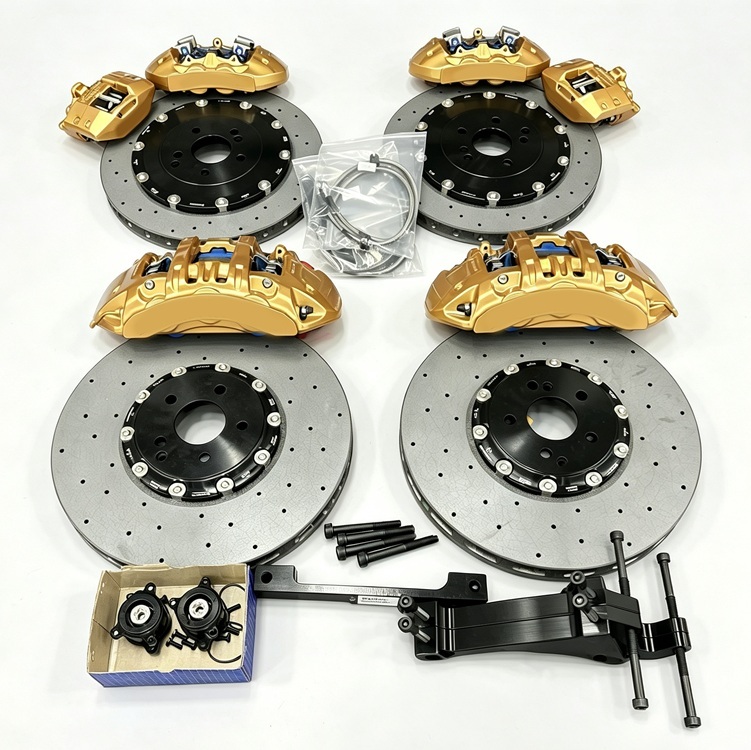
Money separates these two options faster than any performance chart. Carbon ceramic brakes typically add $8,000 or more as a factory option on a road car. A comparable iron setup usually asks a fraction of that figure. Industry comparisons place the initial cost of carbon-ceramic and traditional steel brakes at a wide gap, with the carbon hardware running 5 to 10 times higher than steel. That ratio holds whether you shop carbon-ceramic vs steel brakes at the dealer or on the aftermarket.
Treat these numbers as typical ranges, not universal prices. Vehicle size, brand, and rotor diameter all move the figure. The pattern stays consistent, though. You pay a clear premium up front for carbon ceramic hardware, and you pay it before the car turns a single wheel.
What does the extra money buy? Carbon ceramic discs use a composite construction that demands specialized tooling and long cure cycles. Cast iron rotors come from a mature, high-volume process. That manufacturing difference explains much of the price gap, and it also explains why carbon ceramic brake discs rarely appear on economy cars.
Replacement and Consumable Costs
Replacement tells the same story. A full set of carbon-ceramic rotors for a sports car runs $8,000 to $15,000. Individual premium carbon-ceramic brake rotors on cars like the Porsche 911 GT3 or BMW M5 Competition list at $1,800 to $3,500 each, according to Empire Auto Protect. Rebrake USA notes that swapping a single carbon ceramic brake disc often reaches $5,000 or more.
A complete rotor-and-pad service can land between $15,000 and $18,000. Empire Auto Protect breaks the range down by shop type.
|
Carbon-ceramic brake job |
Independent shops |
Dealerships |
|---|---|---|
|
Typical range |
$3,500 – $7,500 |
$5,000 – $15,000+ |
Iron brake discs cost far less to replace, and that gap drives most ownership decisions. The replacement disc cost for iron stays low enough that many drivers treat rotors as routine consumables. Pads for iron systems also carry modest prices, so a full axle service stays affordable.
Carbon ceramic brake disc manufacturers price their products around long service life, not low entry price. That trade-off sets up the total cost question: does a longer lifespan offset the higher initial cost? The next section works through that math.
Plan your budget around the whole job, not the rotor alone. Carbon pads, wear sensors, and hardware add to the bill. Dealer labor rates run higher than independent shop rates, and that difference shows up clearly in the table above. Ask for a written quote before you approve any work.
Inspect before you replace. A carbon ceramic disc often fails from a chip or a handling error, not from wear. A careful inspection can save you a large sum. Iron rotors give you more warning, because they thin gradually and you can measure them against a minimum thickness spec.
Total Cost of Ownership
Cost per Mile Over Rotor Life
A fair total cost of ownership comparison spreads the purchase price across the miles you actually drive. Carbon ceramic discs ask for far more money up front. They also last much longer under hard use. Iron rotors cost little to buy and little to replace, yet they wear out sooner.
Run the numbers over a long horizon. A carbon-ceramic rotor set can run $8,000 to $15,000, and a full rotor-and-pad service can reach $15,000 to $18,000. That replacement bill is expensive, and it arrives without warning when a disc chips. Iron rotors cost a fraction of that figure per axle, and you can plan the swap on a predictable schedule.
The math favors carbon ceramic only when you keep the car for many years and drive it hard. A long-lived carbon ceramic set spreads its high price across a huge mileage span. A commuter who replaces iron rotors a few times still often spends less in total. Your annual mileage and your driving style decide which curve wins.
Hosenly Auto Parts Value Perspective
Hosenly Auto Parts stocks both rotor types, so we have no reason to push one path. We look at value the same way you should: cost against service life, matched to real use.
Carbon ceramic brake disc manufacturers build their pricing around longevity and performance, not low entry price. That model suits the owner who keeps a high-performance car for a decade and tracks it regularly. Iron suits the driver who wants simple, affordable upkeep and predictable service intervals.
Neither answer is wrong. Iron can win on total cost for many drivers. Carbon ceramic can win for long-term high-performance owners who value durability and weight savings. Match the rotor to your ownership plan, and the value question answers itself.
Carbon Ceramic Brakes for Daily Driving: Noise, Dust, and Cold
Squeal, Dust, and Bed-In Behavior
You may have heard that iron rotors suit daily driving better than carbon ceramic rotors. That claim has some history behind it, yet it deserves a closer look. Early carbon ceramic systems did squeal, and some drivers found them fussy in town. Modern carbon ceramic discs behave far better, and Unplugged Performance reports its carbon ceramic systems run quieter than any iron system it has tried with performance pads.
Bed-in decides much of the noise outcome. A proper bed-in cycle transfers a thin, even layer of pad material onto the rotor face, and that layer helps minimize squealing, according to PMB Performance. Follow this sequence:
-
Make 10 stops from 30 mph down to about 10 mph using moderate braking pressure, allowing about 30 seconds between stops for cooling. After the 10th stop, let the system cool for 15 minutes.
-
Make 5 consecutive stops from 50 mph down to 10 mph. After the 5th stop, let the system cool for about 30 minutes.
A blue tint and a light gray film on the rotor face tell you the bed-in worked. Full seating normally takes about 1,000 miles, and a second cycle may help. Dust varies with pad compound more than rotor material, so choose a low-dust pad if clean wheels matter to you.
Cold-Weather and First-Stop Feel
Cold mornings raise a fair question about first-stop confidence. StopFlex separates the specs clearly. Cast iron brakes usually feel predictable from cold, street-spec carbon ceramic discs show normal cold bite, and race-only carbon ceramic rotors can feel weak until they build heat. Daily drivers should avoid race-only specs unless they accept that behavior.
Street-spec carbon ceramic brake discs therefore pose no real cold-weather penalty. Unplugged Performance notes that current systems work well from boiling track days to frozen mountain roads. Your first stop on a winter morning should feel normal with a street compound.
Daily Driving: Maintenance and Practicality
Inspection, Cleaning, and Care
A quick look before each drive catches most problems early. Molando Brake recommends checking the rotor face for unusual wear patterns, heavy dust or debris, and any surface cracks or heat damage. Normal wear looks uniform. Irregular lines, deep pits, chipped edges, or missing chunks call for a professional inspection. Worn or misaligned pads also wear down carbon ceramic discs faster, so check pad condition at the same time.
Cleaning rewards a gentle approach. Use pH-neutral products and plenty of water, and skip harsh chemicals and abrasives. A soft bristle brush or microfiber cloth lifts dust without force, and you should dry the rotor completely to prevent water spots. Armour Detail Supply and Glossfuel outline a safe wheel-cleaning sequence:
-
Let the brakes cool fully, then pre-rinse the wheel.
-
Apply a compatible pH-neutral cleaner and keep the surface wet.
-
Clean the barrel first with a soft brush sized to clear the caliper.
-
Clean the face and spokes with a microfiber mitt, then detail small recesses.
-
Scrub the tire with a separate brush.
-
Rinse all residue and dry with air where possible.
Glossfuel warns against aggressive barrel brushes, because older carbon ceramic rotors chip at the edge. Check the discs every couple of weeks in heavy traffic, poor weather, or off-road use, and clean after wet drives or track days.
Wheel Fitment and Service Considerations
Fitment and handling deserve planning. Essex Parts notes that carbon ceramic discs often need at least 25 mm more diameter than iron to cool comparably, and that larger discs limit wheel and tire choices. Handle them with care, since one knock during a wheel change can ruin a disc, and wear is measured by minimum mass rather than thickness.
|
Consideration |
What it means for you |
|---|---|
|
Wheel clearance |
Bigger rotors can force larger, heavier wheels |
|
Handling |
Pad or cover the disc; avoid bare-hand contact |
|
Cleaning products |
Some chemical cleaners and abrasives damage the surface |
Carbon Ceramic vs Cast Iron Brakes: Application Fit
When Carbon Ceramic Makes Sense
You should consider carbon ceramic discs if you attend track days or drive spiritedly on a regular basis. Drivers who push their machines to the limit need more than regular brakes, and carbon ceramic options fit that bill, as SDCX Brake explains. These systems stay cool after repeated hard stops and deliver reliable stopping power lap after lap. That predictability is the heart of braking performance under stress.
Weight savings and longevity round out the case. You value reduced unsprung weight for sharper handling, and you plan to keep the car long-term, since the brakes will likely outlast it. A rust-prone climate also favors them. Porsche introduced its PCCB system on the 911 GT2 in 2001, and BMW M offers carbon ceramic brakes as a significant option, according to 412 Motorsport. That answers when to choose carbon-ceramic brakes for many enthusiasts.
When Iron Rotors Make Sense
Iron brake discs suit daily commuting, budget limits, and mixed-use driving. Cast iron is common in standard rotors for passenger vehicles because it is reliable and cost-effective, though heavy, per Dyer Chevrolet Lake Wales. FactionFab lists gray cast iron grades such as G10H18 for modern cars and G11H18 for performance cars.
|
Vehicle type or scenario |
Recommended cast iron spec |
|---|---|
|
Most passenger vehicles |
Gray cast iron, G10H18 and G11H18 |
|
Economy passenger vehicles |
G9H17 grade |
|
Modern cars |
G10H18 |
|
Performance and sport-focused cars |
G11H18 range |
This carbon ceramic vs cast iron comparison comes down to fit. Carbon ceramic discs reward hard use and long ownership. Iron rotors stay practical for most daily drivers. Carbon ceramic brake disc manufacturers price for longevity, so match the hardware to your habits. Either path works when the application matches.
Carbon ceramic wins on performance, weight, and durability. Iron wins on cost and daily-driving simplicity. That is the whole carbon ceramic vs cast iron answer in two lines.
Now apply the rule to your own garage. Track days and high-performance cars point you toward carbon ceramic brake discs. Commuting and value-focused ownership point you toward iron. Make the carbon ceramic decision only when hard use and long ownership justify the price.
Both options earn their place. Hosenly Auto Parts supplies either path, so you can match the rotor to your driving instead of the other way around.
FAQ
Do carbon ceramic brakes actually stop the car in a shorter distance?
Not by much. In a Car and Driver test, two identical Porsche 911s on the same tires stopped from 100 mph within a foot of each other, at 305 feet. Tires limit stopping distance. Carbon ceramic brake discs win on consistency, not on a shorter first stop.
Do carbon ceramic brake discs really last longer than iron rotors?
Yes, under hard use. Carbon ceramic brake discs resist pad abrasion far better than iron, so they wear slowly even when hot. Many owners report outlasting several sets of iron rotors. Damage, such as a chip during a wheel change, usually ends their life before wear does.
Can you run carbon ceramic brakes as a daily driver?
Yes, with street-spec discs. They show normal cold bite and work well in winter. Expect a proper bed-in cycle and careful handling at wheel changes. Race-only carbon ceramic brake discs can feel weak until hot, so avoid those specs for commuting.
Are carbon ceramic brakes worth the extra money?
That depends on how you drive. Carbon ceramic brake disc manufacturers price for longevity and performance, and a full rotor set can run $8,000 to $15,000. Iron costs a fraction of that. Long-term track owners often gain value; commuters usually do not.
How do you know when a carbon ceramic disc needs replacement?
You measure mass, not thickness. Carbon ceramic discs hold their dimensions for a long time, so wear shows up as lost minimum mass. Chips, deep pits, or missing chunks also call for replacement. Have a professional inspect any damage before you approve a swap.